By Tour.af
For centuries the trade routes we now call the Silk Road crossed what is today Afghanistan, linking Central Asia, Persia and the Indian subcontinent. Caravans moved through Balkh in the north, over the passes of the Hindu Kush, and west to Herat. The cities they passed through still hold the layers: Buddhist monasteries carved into cliffs, a mosque tiled in turquoise, a citadel that changed hands for two thousand years.
Travelling that arc today is possible, but it looks different from the overland romance of old travel books. This article explains how a Silk Road trip in Afghanistan works in 2026 and what one specific itinerary, our own Silk Road Highlights, covers. We are Tour.af, a licensed tour operator in Kabul.
Why the Silk Road is a guided trip now
Afghanistan's current tourism regulations require every foreign tourist to travel with an official guide or translator; independent sightseeing and travel between provinces without one is not allowed. Each province you enter also needs a travel permit, issued through the Afghan Tour office in Kabul, with an official fee of about 1,000 AFN per province. A Silk Road route crosses several provinces, so the permit paperwork is a real part of the planning. With us, the Letter of Invitation and permits come with the quote.
The route, stop by stop
Silk Road Highlights runs for ten days, as a small group with a maximum of five guests on fixed departures, or privately on your dates. The price is $2,499 per person. The published route goes like this.
Kabul. The trip begins in the capital: the old town and Bird Market with its blacksmiths and carpenters, the turquoise-tiled Sakhi Mosque, Darul Aman Palace and Babur's Gardens, the walled garden that holds the tomb of the first Mughal emperor. Later in the trip there is time for Chicken Street and its souvenir shops.
Bamyan. A road day through central Afghanistan brings you to the Bamyan valley, a UNESCO World Heritage Site where the giant Buddha statues stood in their cliff niches until their destruction in 2001. Nearby are Shahr-e Gholghola, the ruined 12th-century "City of Screams", and Shahr-e Zuhak, the Red City. Our travel guide puts the Kabul to Bamyan drive at four to five hours.
Band-e Amir. Afghanistan's first national park, with deep blue travertine lakes set in the Hazarajat highlands. It is about one and a half hours from Bamyan, and the day returns to Bamyan for the night.
Samangan to Mazar-i-Sharif. Heading north over the Salang Pass, the route stops at Samangan's Buddhist stupa and rock-cut chambers before reaching Mazar-i-Sharif.
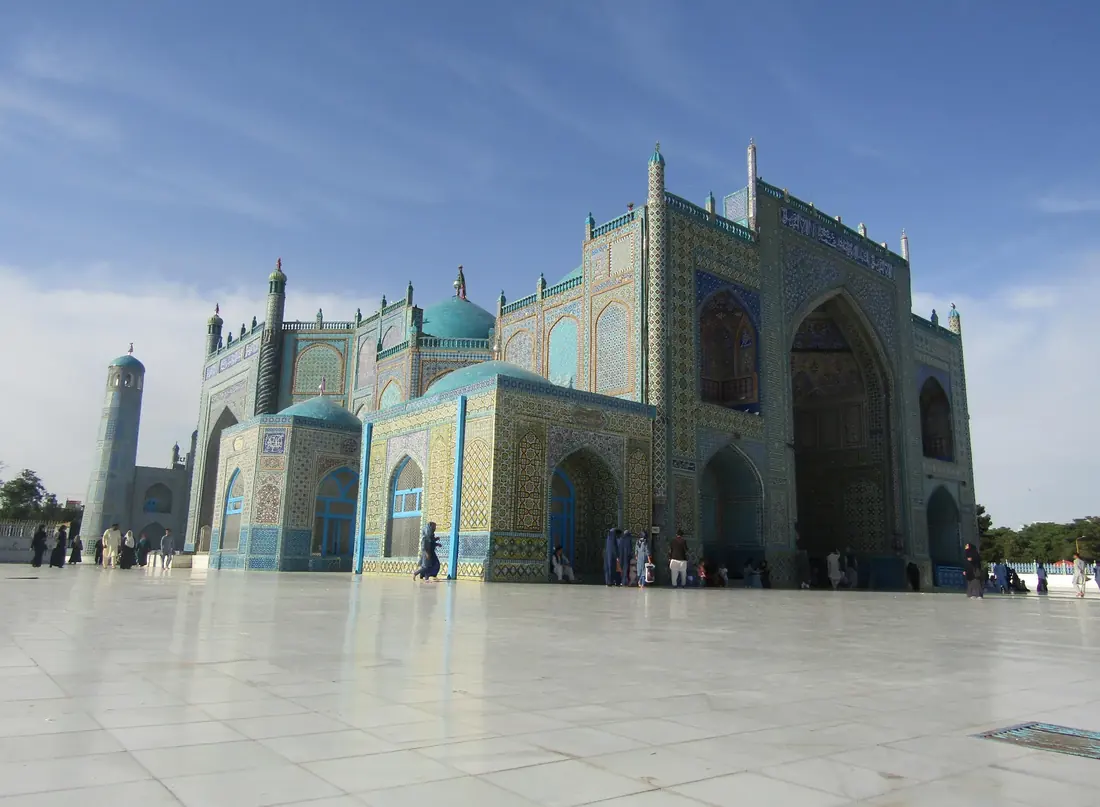
Mazar-i-Sharif and Balkh. The Blue Mosque of Mazar-i-Sharif is the centrepiece: an extraordinary tiled shrine that is sacred to many Afghans. From there, Balkh, often described as the oldest city in Afghanistan, with its ancient walls and an early mosque. The itinerary also includes the historic 12th-century gate at Charkent.
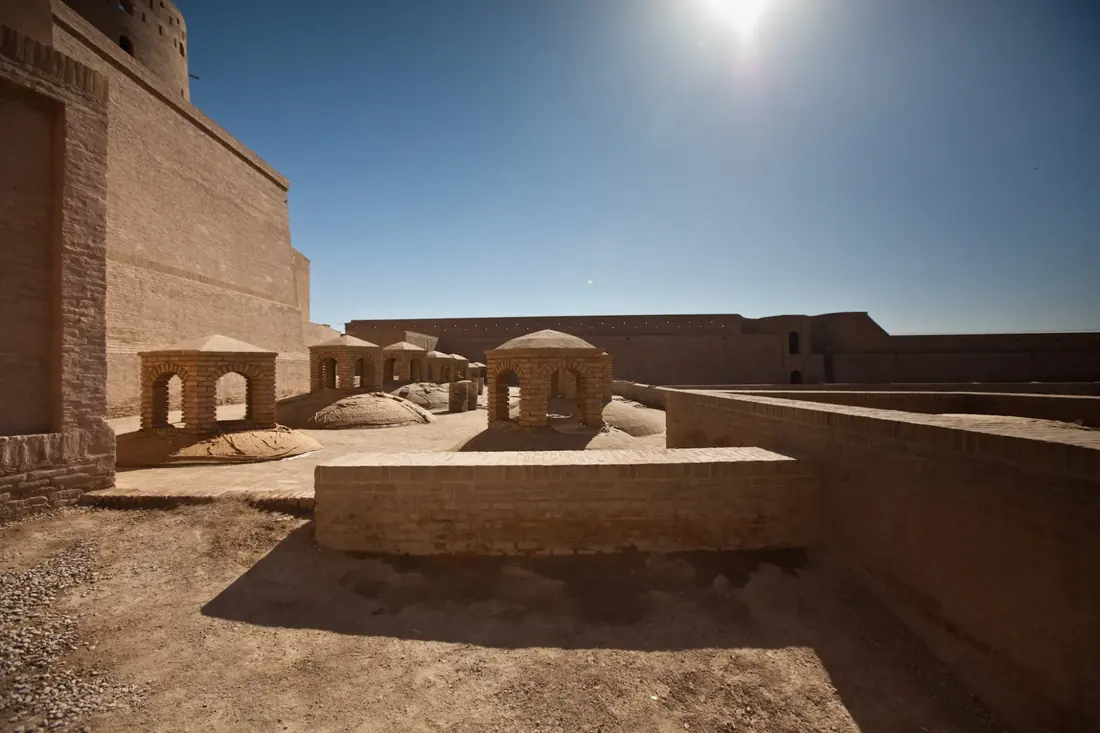
Herat. After a flight back to Kabul, a second flight takes you to Herat in the west. Here you visit the Friday Mosque (Masjid-i Jami) and its tile workshop, the bazaar, the Herat Citadel, Guzargah, the Seljuk-era Puli Malaan bridge, and the Minarets and Tomb of Goharshad. A final flight returns you to Kabul before departure.
Why some legs are flown
The overland distances on this route are long. Our published drive time from Kabul to Mazar-i-Sharif alone is eight to ten hours. Flying the return from Mazar to Kabul and the Kabul to Herat and Herat to Kabul legs keeps the trip to ten days without turning it into a driving marathon. The tour page lists the domestic flights (Kabul to Mazar and Herat to Kabul) as included, together with twin-share hotel accommodation, entrance fees to monuments and parks, private transport with a driver and an English-speaking guide. International flights, visa fees, personal expenses and tips are not included.
Who this trip suits
Silk Road Highlights is for travellers with ten days who want the big historic names on one itinerary: Bamyan, Band-e Amir, the Blue Mosque, Balkh and Herat. It is a fuller trip than our private Kabul week, which stays in and around Kabul for seven days from $1,599 and does not include Bamyan. It is very different again from the Wakhan, which is a summer mountain expedition from $3,200.
Spring (April to June) and autumn (September to November) are the comfortable seasons for this route. Summer is hot in the valleys; winter brings cold and closed mountain roads.
Practical notes for the road
Dress modestly with arms and legs covered; women wear a headscarf in public. Mosque visits are timed outside the noon (1:00 to 2:00 PM) and Asr (4:00 to 5:00 PM) prayer windows, and worshippers are never photographed. The Blue Mosque and the Friday Mosque in Herat are both working places of worship, so your guide will plan the timing. Bring US dollars in cash, as cards rarely work.
Further reading
The full day-by-day plan, inclusions and departure options are on the tour page for Tour.af's Silk Road Highlights. If you are comparing it with other routes, our Afghanistan tours page lists them side by side, and how booking works explains the steps from first message to Kabul airport.
Tour.af, Ahmad Shah Baba Mena, Kabul 1012, Afghanistan. +93 70 521 4101. WhatsApp · tour.af
Written with AI assistance and reviewed by Tour.af.